
A lot has happened in the two decades since Matthew E. White and two friends started the multidisciplinary consortium, The Patchwork Collective. The intent was to build the foundation to make Richmond a place for artists to be, rather than just be from.
The vision has come full circle now that former Virginia Commonwealth University graduate and current premiere jazz drummer, Nate Smith, has returned to live in the city and record and perform at Spacebomb, the studio that evolved from the Collective.
At the turn of the century, ambitious players left a midsized market like Richmond, primarily for the major media centers of New York or Los Angeles. Smith followed that trajectory. Born in Chesapeake, Smith came to VCU in 1997 on a Carpenter Foundation graduate scholarship after graduating from James Madison University.
At that time, under local legend Doug Richards, the jazz program was as much a professional finishing school as a degree program; many of the school’s marquee alumni never actually graduated before launching their career. So it was with Smith, who met the great bassist Dave Holland when he did a residence at VCU. He relocated to New York City as a member of Holland’s band the week before Sept. 11, 2001.
“I lived in New York for 19 years,” Smith says. “I played with the people who were around, Chris Potter, Pat Metheny, Ravi Coltrane.” In other words, the top jazz artists of the era. But Smith recorded in a variety of genres, including as a leader on his own multiple-Grammy nominated “Kinfolk: Postcards from Everywhere.”

In 2020, when COVID shut down touring, he moved to Nashville.
“The only way to make a living was in the studio,” Smith says. “Thankfully, I had contact with producers like Dave Cobb and Mike Elizondo. They kept me working while I was out there. I was really blessed.”
The Spacebomb story
During that time Spacebomb rose, fell and survived.
“The vision isn’t that much different now,” White explains. “It’s just matured, and it is manifested through so much actual business experience. I understand what is going to work. There is a lot of water under the bridge.”
In the early days of the Patchwork Collective, White’s nine-piece Fight the Big Bull (originally the trio Fight the Bull and occasionally, the supersized Fight the Giant Bull) was the epicenter of a vital RVA scene. The group released three critically praised albums, was reviewed by The New York Times and Downbeat Magazine, and defined a nascent Richmond sound. Building on that, inspired by the in-house bands of classic rock record labels, White set up a ramshackle recording studio in the attic of his rented house on Libbie Avenue, the first iteration of Spacebomb.
It was a surprise when the reserved White made his debut as a singer in 2012 for the label’s first release, cleverly named “Big Inner.” At once laid back and deeply spiritual, the record was an immediate, idiosyncratic success [both in the U.S. and abroad].
Additional releases, especially Natalie Prass’s self-titled debut, featuring a cinematic orchestral closer arranged by Spacebomb co-founder Trey Pollard, proved the approach was no fluke. A shoestring operation became a full-blown label, with major investors, full-time staff, and a spacious, bespoke studio on Robinson Street. The artist roster grew. The business expanded from production into management.
The Spacebomb story, a scrappy operation with some promising early successes powered by a killer house band, made it seem like a potential 21st-century analog of legendary labels like Stax or Motown. The investing company [Glassnote Entertainment Group’s Resolved Records] offered a seven-figure investment and a strategic partnership; funding to build the studio and business expertise in label operations, publishing, production and artist management. There was a full-time staff, a rapidly expanding stable of promising but unproven artists. Spacebomb focused everywhere, which in business is the equivalent of focusing nowhere.
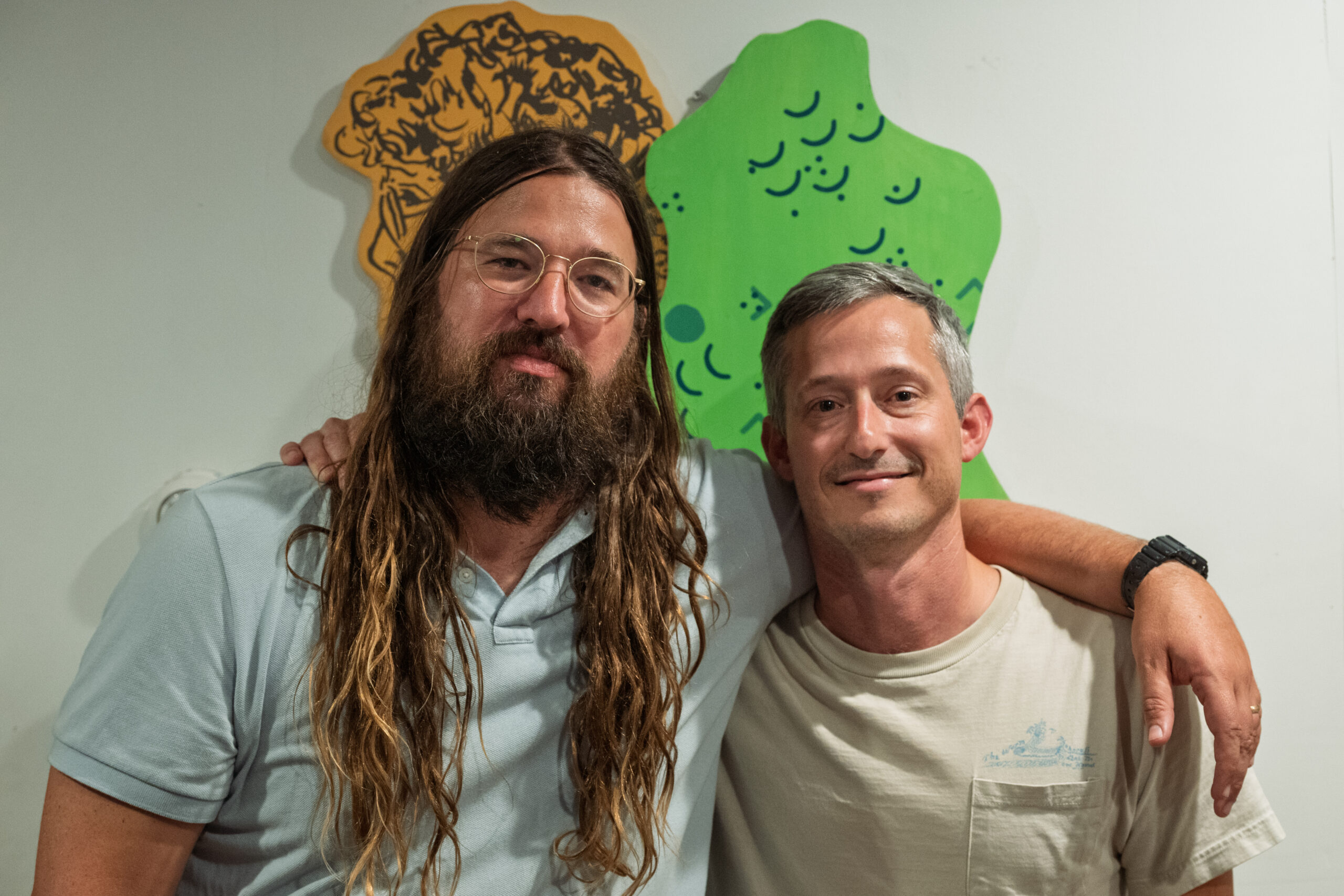
“Our story is not unlike many others,” Medaries says. “It’s a reboot. We are so lucky to still have the space. [When the Robinson Street building was for sale, White put together a consortium of sympathetic investors to buy it.] Matt has always had a vision for where he wants to go. I am just there to help him.”

“It’s been about three years,” De Jong says. “It’s a great team; Jesse handles the business side, Matt is the creative director. There is a lot of love poured into the room. We are booked up, a lot of local artists, but regional and national ones as well. We are growing one step at a time.”
Nate Smith’s homecoming
When Smith returned to Richmond, after playing in Jason Moran’s group as part of the Virginia Museum of Fine Arts’ epochal “Dirty South” program, it was a kind of homecoming.
“I got to hang to hang out in Richmond for a week, and I was like, ‘Man, this feels really, really great,'” he recalls. “Not only because I know the city, but that it had changed so much, gotten so much more vibrant in terms of like an art scene and a food scene. There was so much stuff to do.”
He also adapted his music to fit the financial reality.
“Kinfolk is a big expensive band. It is hard to absorb the cost,” Smith says. “I started doing smaller projects, stuff that is a bit more nimble. So for the past couple of years, it has been me leading those projects and touring, leaving Richmond and coming home to Richmond. The volume of work is still the same as it was when I lived in New York. And it feels really nice.”
The drummer has been recording at Spacebomb, finishing a new album that will be released in August. “It’s a proper studio album, with a lot of different guests. I will be touring that quite a bit this fall,” he says. The first single, a reimagined “cosmic take” of the Pointer Sisters’ “Automatic” featuring Lalah Hathaway, came out earlier this month. “It’s a little like a Quincy Jones kind of record. I create songs, cast them, and then have different people come in to contribute,” he adds.
On June 26, Smith played a live set at Spacebomb as a soft opening for an upcoming 28-gig tour of North America and Europe. It was a set with ace guitarist Charlie Hunter and bassist Ciara Moser completes the trio. “She is a phenomenal,” Smith says. “I am mentoring her through Next Generation Legacy, a program created by drummer Terri Lynn Carrington at Berklee. Charlie Hunter is your favorite guitarist’s favorite guitarist. He’s an encyclopedia of blues and classic soul R&B. Ciara is an up-and-coming young genius. She is incredibly fluid on the six-string bass.”

It was Smith’s first live performance at Spacebomb, but got a sense for the great vibe last month at the Natalie Prass set celebrating the tenth anniversary of her debut. That night reunited the original Spacebomb house band, a joyful reminder of the studio’s roots, and a callback to White’s Patchwork past.
“I see these events as like the New York loft scene [of the ’70s], small format, highly curated with great musicians, for a great community. I just want to make the situation beneficial spiritually, artistically, and tangibly for everyone that involved.”
Buffeted by reality and burnished by experience, White’s essential ethos remains the same. It is hard to tease out how differently something as complex as the burgeoning RVA scene might have been without his presence, but there is no question that he, and his partners, have been a positive force.

“Matt is a big picture thinker,” Smith says. “He is such an entrepreneurial cat, and he has a real vision of the things he wants to do. He’s quiet, but he gets a lot done.”
The future is, inevitably, uncertain. They may revive the label, get the house band back together on occasion. There are a few spaces left for a mid-July in-studio performance from Andy Jenkins, White’s counterpart in The Great White Jenkins [more on Jenkins in an upcoming Style story by Davy Jones].
What comes next? With the ownership of the building secured and a steady stream of business, a least Spacebomb has a tomorrow in which to find out.