
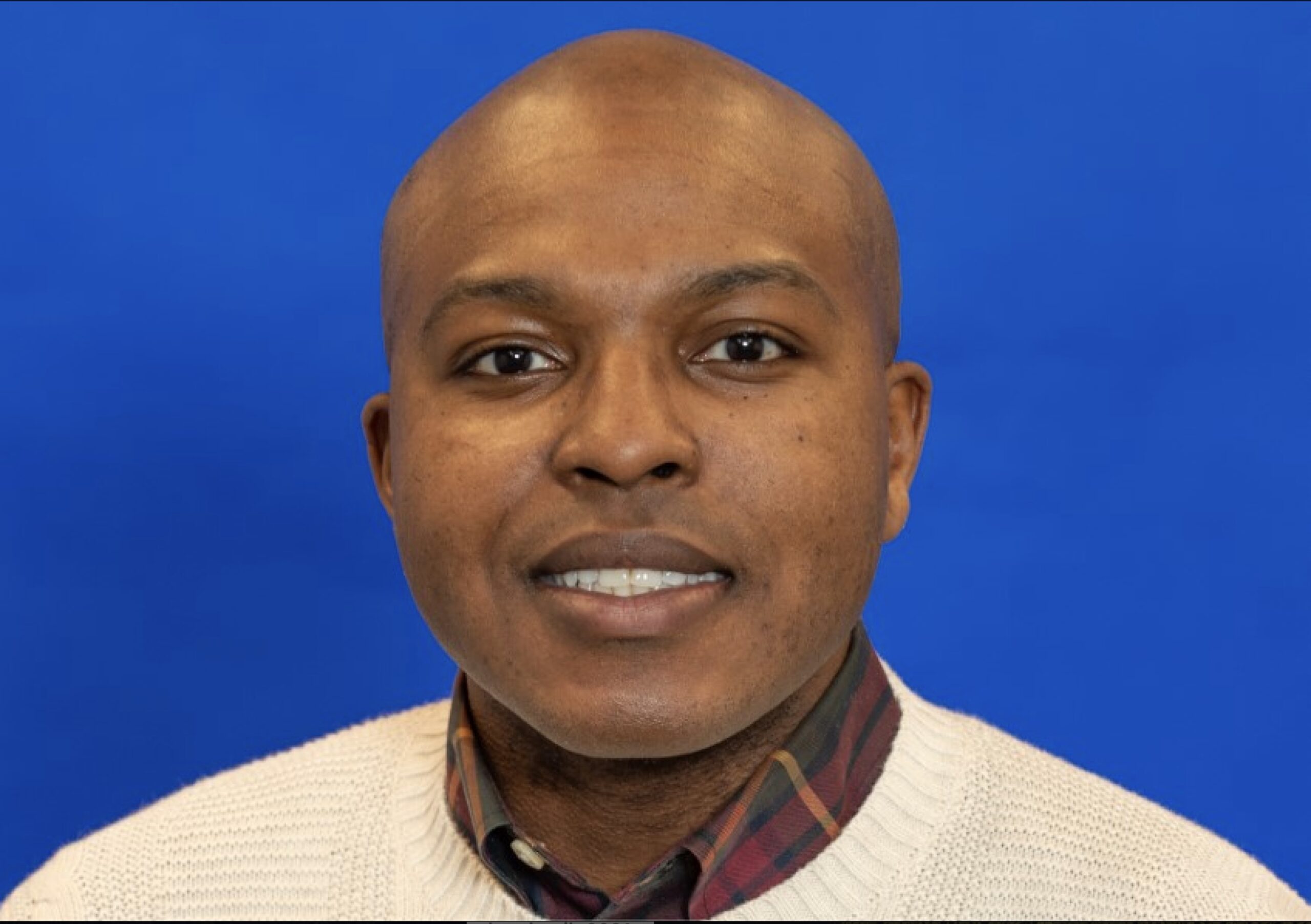
Marvin T. Chiles, an associate professor of African American history at Old Dominion University, has always been a huge sports fanatic. But he’s also a historian.
That combination inspired him to write “Playing for Power: Black Resistance in Amateur Basketball and Football in Jim Crow Virginia,” which he’ll discuss on Feb. 10 at the Virginia Museum of History and Culture. “I wanted to write a sports history that showed the game behind the game,” he says. “And by that, I mean how sportsmen intellectualized and moralized the games they dedicated their lives to.”
The book looks at amateur sports in Jim Crow-era Virginia, revealing how, in addition to churches, workspaces and civil rights organizations, sports were a key arena for Black resistance to white supremacy. Chiles recounts the development of Black football and basketball culture at the high school and college levels in Virginia from the 1890s to the early 1970s.
His goal was to write a book that documented the often-forgotten efforts of Black sportsmen who aided in the Black freedom struggle. “When people think about Black leaders during Jim Crow, rarely do they think of athletes and coaches,” Chiles says. “This book simply seeks to correct the record.”
Black students started playing basketball and football in Virginia as early as the late 19th century, with most of the original games taking place at Historically Black Colleges and Universities (HBCUs) such as Virginia Union, St. Paul’s College, and Hampton Institute. Black communities organized recreational leagues and games in the early 1900s, many of which were started by former HBCU athletes. By the 1920s, Black high schools had comprehensive sports leagues to organize their games.

Positive role models
Chiles’ book demonstrates how amateur sports strengthened education, neutralized class divisions, shaped Black masculinity, mentored Black male leadership, cultivated race pride, and reflected Black desires for urban modernity. “Black athletes in high schools and colleges became symbols of Black manhood and leaders in the Black communities they lived in,” he says. “Black kids, mostly boys, looked up to their athletes in similar ways that they do today.”
Given that Jim Crow segregation restricted Black people from first class citizenship, Chiles says those athletes made sure that they were positive role models for Black boys to follow. “In many ways, they provided a pathway to manhood for Black boys who would have felt that it was impossible to become men in a segregated world.”
He sees sports as having shaped Black manhood by giving them an arena to express masculine virtues of sacrifice, mentorship, teamwork and heroism. These were attributes that Black men needed to survive and thrive in a world designed to strip manhood from them. “The main arbiters of this were Black male coaches,” says Chiles. “These were men who guaranteed that their players understood that the results of the games mattered less than the lessons being taught for Black male survival.”
In many ways, sports were a form of resistance to white supremacy, in that Black men weren’t allowed to participate in sports conducted at white schools during the Jim Crow era in Virginia. White educators at the time didn’t care to create or administer sports for Black youth in Virginia. “This was done intentionally as a means to restrict Black boys from the traditional path to manhood that white boys had,” says Chiles. “Black-run sports were created to combat that willful neglect and give Black boys the chance to become male leaders by developing both physically and mentally akin to white men.”
Segregation was intended to prevent Black boys from playing sports with and against white boys. Although it was supposed to prevent them from playing at all, Black Virginians fought back by investing their own time and resources to create teams and leagues that functioned mostly outside of the white purview. “Segregation honestly helped Black sports develop quite well because it put Black men in the position to mentor the next generation of husbands, fathers, white and blue collar workers for the Black community,” he says. “Without segregation, bigotry would have still existed. So Black boys would have been excluded from sports entirely without segregation.”
Key to Civil Rights Movement
In doing his research at Virginia Union, Virginia State and the state archives, Chiles often found himself surprised. He hadn’t expected the sheer amount of energy Black communities put into creating sports leagues at the high school and college level. “Organized athletics are a leisure time activity that requires money and time to play and administer,” he says. “Black Virginians, in general, had little of that compared to whites. Yet, they insisted on investing what many did not have to give what they knew was needed to those who needed it the most.”
Chiles was also shocked by the way Black athletic leaders and athletes articulated what sports meant to them. “These men wrote articles and gave speeches about the moral lessons taught to young Black men through sports,” he says. “They also kept track of the Black men they coached and used them as positive examples in their speeches and writings.”
The growth of Black student athletics was key to the Civil Rights movement. Black sports were like other Black institutions (HBCUs, churches, Black-owned businesses) that developed Black human capital during segregation. “Black sports showed Black people that while they were segregated, they could compete with white Americans if given the chance,” says Chiles. “Athletics were the primary physical reminder that White supremacy was, at best, a myth.”
Marvin Chiles book talk on ““Playing for Power: Black Resistance in Amateur Basketball and Football in Jim Crow Virginia,” will be held on Tuesday, Feb. 10 at the Virginia Museum of History and Culture. Tickets