

Standing on the banks of the James River in the 1960s, Dorothy Churchill looked out over the Williamsburg water with regret.
It was here that the original 1607 Jamestown Fort was believed to have been lost to the waters of the James. A cypress tree in the water seemed to mark the place where the land had once been.
Churchill, a lover of history and travel, expressed her feelings of this lost opportunity to learn about the history of the first permanent English settlement in the Americas to her granddaughter Elizabeth, who was about 8 or 9 at the time.
“That sparked something in me,” says Elizabeth Kostelny, who went on to lead Preservation Virginia, the nonprofit responsible for discovering the fort’s remains in the mid-’90s. Founded in 1889, Preservation Virginia is a statewide organization that aims to help preserve and advocate for Virginia’s historical places.
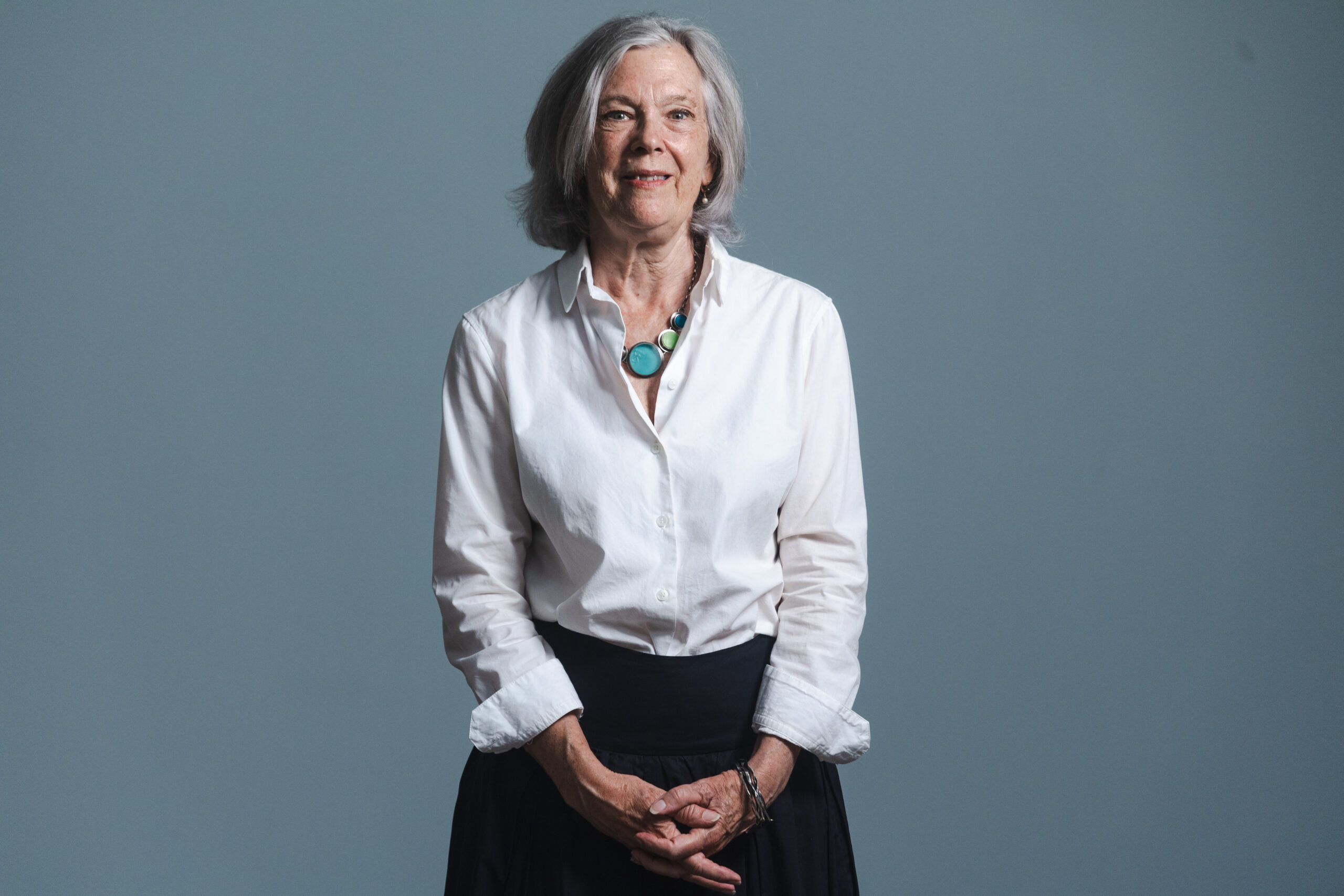
Last month, Kostelny retired after 34 years with the organization, including 23 as its CEO.
In her time with the nonprofit, Kostelny undertook numerous initiatives to help Virginians connect with their history and conserve notable landmarks. Her efforts included leading the campaign to fund and construct new facilities for the organization’s Jamestown Rediscovery program ahead of the settlement’s 400th anniversary, supporting countless preservation projects, engaging with Virginia Tribal Nations for a fuller telling of the commonwealth’s history, strengthening the organization’s public policy and historical preservation advocacy work, and focusing on sites of African American history.
A Newport News native, Kostelny received a degree in art education from Longwood University and taught for four years before obtaining her master’s in art history from the University of South Carolina. She met her future husband while working at the latter university’s McKissick Museum.

The couple moved to Richmond in 1990 after Kostelny’s husband was hired by the Virginia Museum of History and Culture; Kostelny was subsequently hired by Preservation Virginia as its curator of collections.
The nonprofit had a very different focus at the time. Then known as the Association for the Preservation of Virginia Antiquities — which is still its official name — Preservation Virginia owned 38 historic properties across the commonwealth, far more than the six it currently maintains.
Soon after Kostelny arrived, the nonprofit’s board and staff undertook a serious analysis of its structure and finances; Kostelny credits her predecessor, Peter Dun Grover, with updating the organization’s mission statement to include education and statewide preservation work.
“That opened the door to so many things,” Kostelny says. “It was kind of the lightning point for a transformation that happened over the next two decades where we changed our organization structure,” including the transfer of ownership of most of its 38 properties to local preservation groups and promoting preservation at the local level.
Kostelny has overseen this refocused and revitalized Preservation Virginia since she was named CEO in 2001. Grover’s mission update, she says, allowed the organization to launch Jamestown Rediscovery, the archaeological effort to investigate the remains of the 1607 Jamestown Fort. Started in 1994, the project was initially envisioned as a 10-year effort.
Prior to the fort’s discovery, Preservation Virginia received criticism for embarking on the project, including letters published in The Virginia Gazette that called it a waste of funds.
“[They] thought it was foolhardy because everyone knew that the fort had washed away into the river,” Kostelny recalls. “Very quickly, in that first season of archaeology, they found 75,000 artifacts that dated to the first quarter of the 17th century, so we knew more of the fort was on land than had previously been suspected.”
The dig, which is ongoing, has garnered international recognition for its approach to public archaeology, allowing visitors to walk up and view artifacts that haven’t been touched by human hands in more than 400 years.
“The discovery has rewritten our understanding of the beginning years of this nation,” Kostelny says. “In the artifacts that have been uncovered you can see the personal stories and the interactions between the native peoples and the settlers. Every year, we have a greater depth of knowledge of that period.”
For Kostelny, the Jamestown discovery encapsulates why the nonprofit’s mission of historic preservation is important.
“There’s a physical sense you get from standing where history happened,” she says. “It’s different from reading it in a book or seeing a documentary. Being surrounded by a place gives you a different appreciation.”
Virginia’s Most Endangered Historic Places List
After Preservation Virginia merged with the Preservation Alliance of Virginia in 2004, the nonprofit took up the latter’s tradition of creating Virginia’s Most Endangered Historic Places List, an effort to recognize historical places around the commonwealth that face imminent or sustained threats. Of the 180 sites that have been named to the list over the years, the vast majority have either been saved or are in the process of being saved; fewer than 10% have been lost.

The 1932 Richmond Community Hospital located on the campus of Virginia Union University was included on this year’s list. Founded when the city’s white hospitals were still segregated, the medical facility was established by the Black community following a painstaking five-year fundraising process during the Great Depression. In the 1980s, the hospital moved to its current location in the East End and transferred its former site to VUU. Demolition of the vacant property to make way for 200 market-rate housing units seemed imminent, but after outcry from local activists, VUU announced in October that the old hospital would be spared from the wrecking ball.
Preservation Virginia has also worked to preserve Shockoe Bottom, including nominating the historic neighborhood to America’s Most Endangered Historic Places list and partnering with the descendant community to recognize its significance.
In 2012, the nonprofit launched the Tobacco Barns Preservation Program to help protect tobacco barns, a historic symbol of rural Virginia. Once an essential part of the process of curing tobacco, many of these landmarks have gone the way of the dodo as the tobacco industry declined in general and some states have actively discouraged tobacco cultivation.
“Those iconic structures that sit in fields as you drive through Southside Virginia, we noted, were deteriorating and disappearing from the landscape,” Kostelny says. “Tobacco is such a huge story and such a personal story for so many people. If you talk to anybody who grew up prior to the 1970s in Southside, they probably had some opportunity to work in tobacco or a tobacco farm.”

In 2013, Preservation Virginia included the state’s Rosenwald Schools on its Most Endangered Historic Places list. Funded by Sears cofounder Julius Rosenwald in partnership with educator and activist Booker T. Washington, these schools were built all over the South to educate Black students during the early 20th century. Preservation Virginia has worked since to assist community groups and property owners in their conservation efforts; it recently completed a two-year architectural survey with the Virginia Department of Historic Resources to document roughly 380 Rosenwald buildings.
The nonprofit also recently named the second cohort of its African American Fellows Program as part of the Voices Remembered initiative. The program aims to increase the number of trained community preservationists who can help save African American historic sites in Virginia.
While undertaking these efforts, the nonprofit has continued to maintain six historic sites in the commonwealth: Historic Jamestowne, the John Marshall House, Bacon’s Castle, Smith’s Fort, Cape Henry Lighthouse and Patrick Henry’s Scotchtown.
Having found the 1607 Jamestown fort that was once feared lost to the river, Preservation Virginia is concerned today about the impacts of sea level rise, increasingly severe storms and climate change on the site. They have launched the Save Jamestown campaign to help combat this.
“We are losing sensitive archaeological resources because of that flooding, so we’re working on a plan that would preserve Jamestown and preserve visitor access for the next 75 years,” Kostelny says.
As for her own plans for the future, Kostelny and her husband have purchased an Airstream Basecamp trailer and plan to visit historic sites around the country. She credits her wanderlust in part to her grandmother, who took a train trip out west to visit sites like Yellowstone in the 1920s as a young woman.
Will Glasco, who previously served as Preservation Virginia’s chief operating officer, has been named as the nonprofit’s new CEO. Kostelny is thrilled with this development.
“Preservation Virginia is in great hands,” Kostelny says. “Will has phenomenal capacity to take the organization into its next chapter. He’s enthusiastic about history and historic places, and, most importantly, he really connects with people, and is able to share with them why these places are important.”
Looking back on more than three decades of preservation work in the state, Kostelny emphasizes the need for community involvement in saving Virginia’s historic spaces.
“Preservation isn’t accomplished just by one person,” she explains. “It really is a team effort, and that team extends beyond the folks that are employed by Preservation Virginia [to include] the networks that we’ve built and the connectivity of those folks and their willingness to share their experience with others.
“There are even greater things yet to come.”