
It makes sense that collecting boomed among Black Americans after the turn of the 20th century.
Black writers, thinkers, and community leaders were well aware of the “Lost Cause” movement venerating Confederate memory and promoting the premise that slavery had been a benign, even benevolent, institution. They could see that Black history was being erased and distorted, while at the same time, Black readers were barred from most Southern libraries at the height of the Jim Crow era.
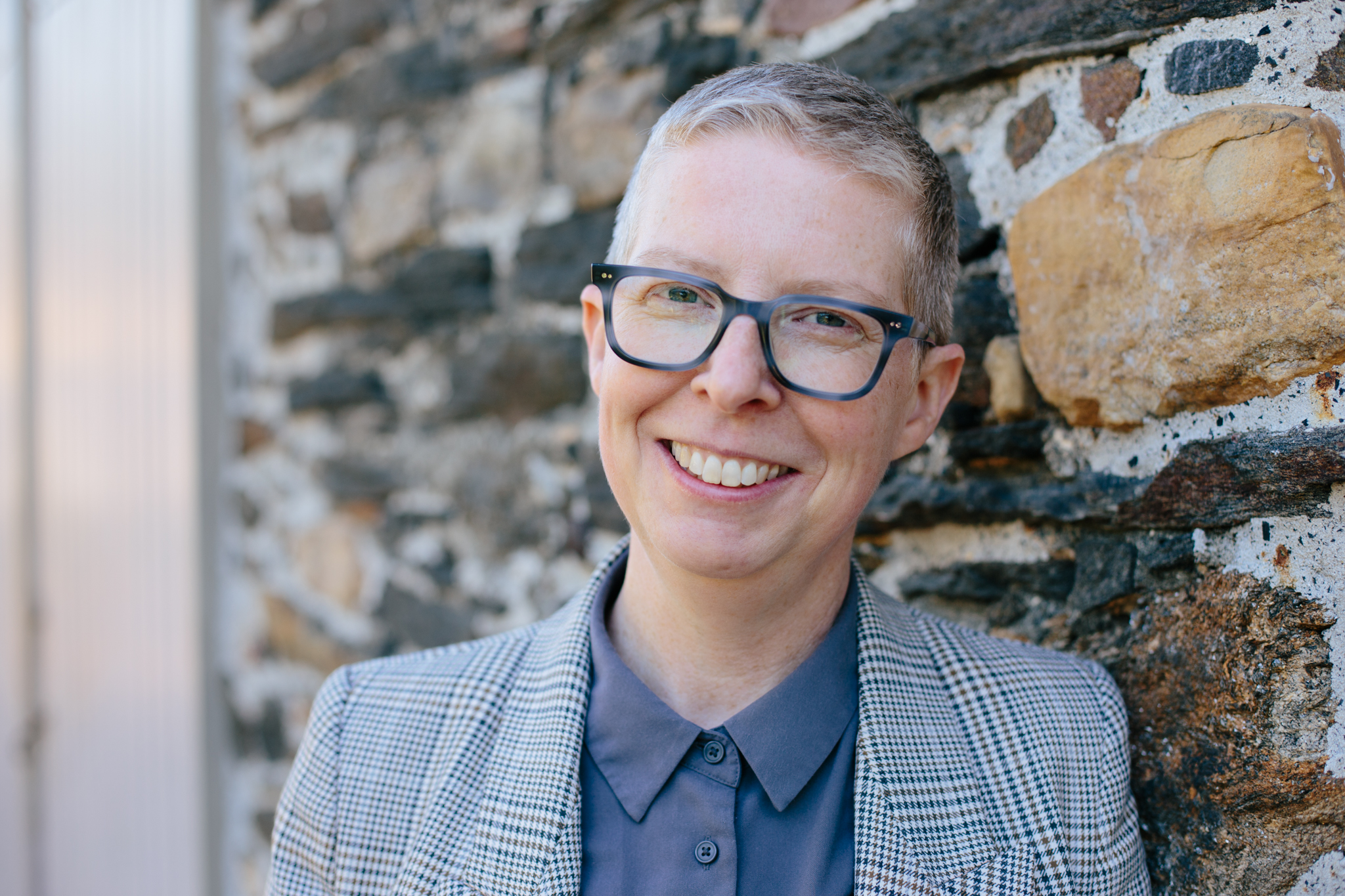
The result was that Black people across the country began to create their own collections to preserve Black history and make those materials broadly accessible. Laura E. Helton’s book, “Scattered and Fugitive Things: How Black Collectors Created Archives and Remade History” will be the subject of her talk on Wednesday, Sept. 3 as part of the Carole Weinstein author series at the Library of Virginia.
It was also the emergence of the Harlem Renaissance that inspired writers and artists to, in the words of bibliophile Arthur Schomburg, “dig up the past.”
There was particular interest in the history of Africa and how that history shaped African American culture. Collections like the one Schomburg built at the 135th Street branch library in Harlem became meccas for the Harlem Renaissance writers and artists to gather, do research and share their work. “My research on Schomburg also turned up a surprising connection to the Library of Virginia, which I’ll discuss in my talk in Richmond,” Helton teases.
Archiving activism
Helton worked for a decade as an archivist of American social movements, processing the records of civil rights activists, women’s rights organizations and trade unions. As a field archivist in Mississippi in the early 2000s, she traveled around the state, working with librarians and curators to document local civil rights histories. “In that work, I was reminded every day that history does not belong only to the past,” she says. “Decades after the events documented in the collections we were preserving, there were raging debates about how to teach and exhibit civil rights history and ongoing efforts to prosecute those who had murdered civil rights activists.”

That work inspired her to write about how archives impact the present, and especially how hard people have to fight to make sure Black history is recorded, preserved, taught, and exhibited. Her research was done at over a dozen libraries and archives across the country, including the Gainsboro Library in Roanoke and the Hampton University Museum in Hampton. “Black collectors knew that most libraries in the United States weren’t collecting Black history and if they were, they often weren’t cataloging it in a way that made it accessible,” she says. “So, they saved every scrap of material they could locate and bought whatever material they could afford.”
And while the interest, urgency, and imperative to collect were similar in the North and South, the conditions were very different because of the South’s rigid racial segregation. Across the South, Black librarians — mostly women — built small collections devoted to Black history and culture in segregated branch libraries, and they often faced opposition from local white officials. “In Roanoke, librarian Virginia Lee was told to get rid of the Black history collection at the Gainsboro Library,” Helton says. “Rather than comply, she took a risk by hiding the books in the library’s basement and providing secret access to them.”
Collectors gathered books of every kind — literature, poetry, history, science, musical scores, sociology, economics, religion — but also other kinds of artifacts like letters and manuscripts, photographs and prints, newspaper clippings and scrapbooks. “The earliest object in the collection is a text by Junilius Africanus printed in 1550;” Helton says. “One of the rarest works is the first edition of David Walker’s fiery abolitionist manifesto, ‘An Appeal to the Coloured Citizens of the World.’”
Early collection from Howard University
In the early-20th century, most collectors were men. They built parlor libraries that served as informal spaces for people to gather and consult their collections. But by the 1910s, these private libraries started moving into institutional spaces, where they were usually maintained and expanded by professionally trained women librarians.
In 1914, Jesse Moorland donated his extensive collection, especially strong in the history of slavery, to his alma mater, Howard University. In 1930, Dorothy Porter was hired as a librarian to organize and build on his collection. Over her 40-year career, she created a customized cataloging system for the Black history collection at Howard, published many bibliographies, traveled internationally to locate relevant material, and added thousands of additional items to Moorland’s. “Porter was part of an important, but often overlooked, generation of Black women intellectuals who built the archival institutions scholars still rely on today,” Helton says.
For the most part, Black collectors saw building collections as part of a broader struggle for civil rights, so they made their work known and accessible to as many people as possible. Today it’s clear that those collectors were a key part of a movement promoting the importance for all Americans of studying, knowing and valuing Black history.
“Their work was bold then, in the Jim Crow era when prevailing stereotypes denigrated Black people both past and present,” Helton explains. “But it’s also an important model for embracing the fullness of American history today, when many libraries and museums face calls to remove Black historical materials from their collections or exhibitions.”
Laura E. Helton book talk on “Scattered and Fugitive Things: How Black Collectors Created Archives and Remade History” will be held on Wednesday, Sept. 3 at 6 p.m. at the Library of Virginia, 800 E. Broad St. Tickets