
Shirlene Obuobi has been drawing for as long as she can remember. She gravitated to drawing comics because they allow her to use both visual and textual information to get her points across.
A third-year general cardiology fellow at The University of Chicago Medical Center, where she completed medical school and internal medicine residency, Obuobi is a Ghanaian American physician and cartoonist. She’ll deliver Virginia Commonwealth University Libraries’ Black History Month Lecture on Tuesday, Feb. 6. Her topic will be “Narrative Medicine and Identity.”
Looking back at her childhood, there was little question she’d become a doctor. Her mother is a neonatologist. The family moved to a very small town in Arkansas where her mother served as the only pediatrician for 50,000 people. Obuobi recalls spending a lot of time in the hospital helping with efforts such as Reach Out and Read.
Like so many other healthcare workers, she had a noble goal of helping people, coupled with an interest in science. “When I got older and worked retail, I realized that I find it really hard to wake up in the morning every day to make money for someone else,” she says. “I still do that as a physician, but I also know that through my knowledge I am necessary in my patients’ care.”
The evolution from drawing to doing graphic medicine came quite naturally. Her comics focus on the challenges of being a Ghanaian-American woman in medicine and the stresses and challenges of medical school. “I’ve been using comics as a medium for self-expression since I was a child,” she says. “I started relaying my experiences as a medical student and continued from there.”

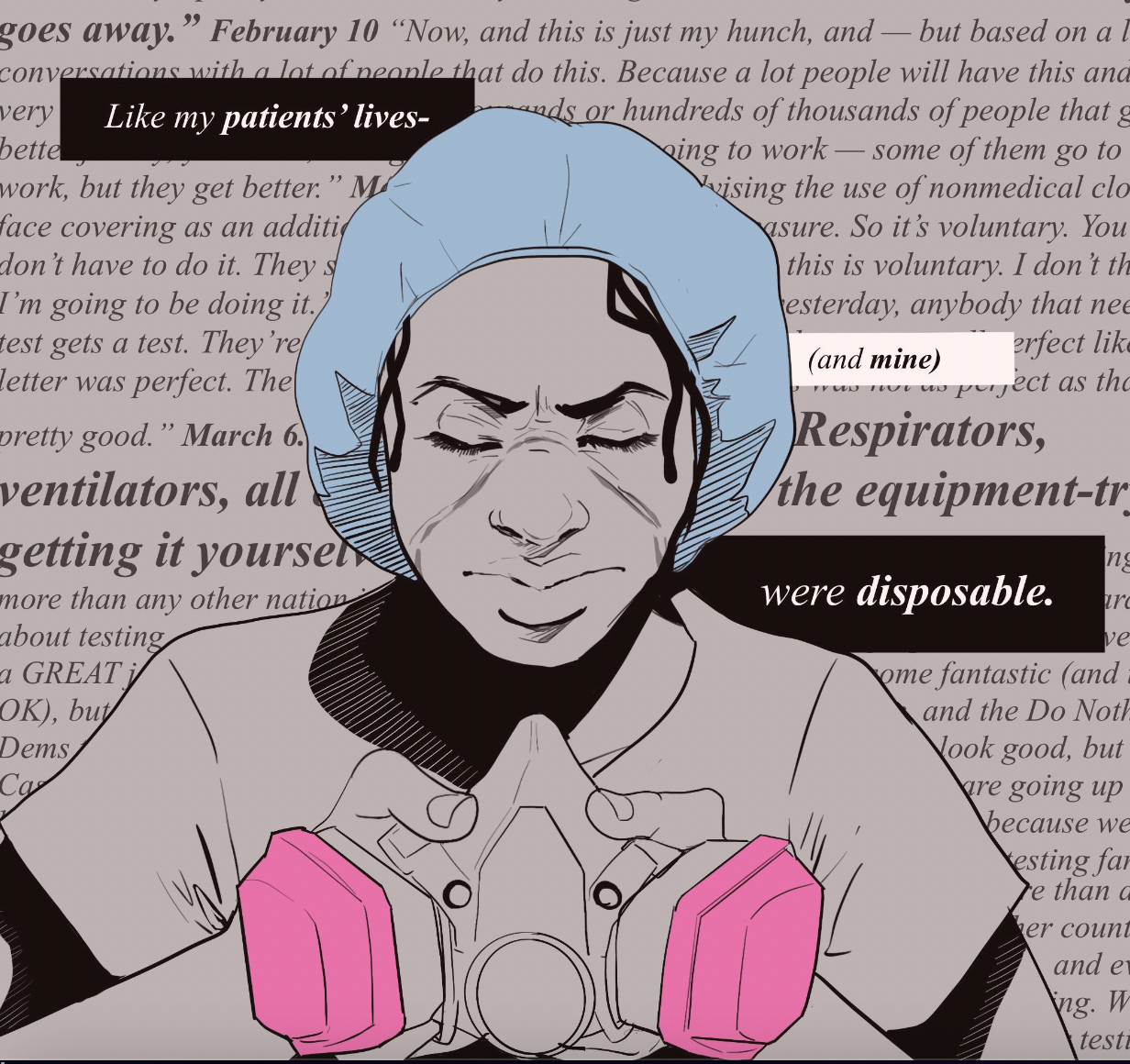
With nearly 38,000 Instagram followers, Obuobi’s comics have been featured in UChicago Medicine, Proto Magazine and the Medical University of Vienna’s Art, Action, Attitude/Body exhibit. In 2022, she began writing a monthly column for The Washington Post about navigating the medical system accompanied by a comic panel, offering a behind-the-scenes look at the challenges faced by both doctors and patients. Her comics explore the challenges of medical school, developing a professional identity and often, bias.
She’s drawn about sexism, racism, stereotyping and major and microaggressions and physicians’ frustrations with medical insurance. Graphic medicine has changed the dissemination of medical facts, a topic she plans to address in her VCU talk. “I think that comics are more accessible across literary levels and language levels,” she explains. “They can be disarming by allowing people to focus on a message and can grab attention in a world teeming with misinformation.”
Tackling difficult topics like sexism and racism has become part of Obuobi’s artmaking. “My goal is to use art and narrative to help people confront biases and issues in healthcare they may otherwise turn away from. It lowers defenses, helping people listen and learn,” she says. “I think of myself as a canary in a coal mine.”
From the beginning, she’s seen practicing medicine and creating art as complementary activities.
To be a good doctor, she believes you have to see the person as a whole. You must figure out what’s most important to them and why and understand their suffering in a few short minutes. You must be able to critically assess your own biases, your tendency for projection or transference, and understand if or why those biases are influencing the care you provide. “Creating art requires that sort of thoughtfulness,” she says. “By distilling my ideas, perspectives and observations into comics, I work that muscle.”
The challenges for a medical student in the 21st century are great because medicine has only gotten more inaccessible over the years, more expensive to pursue and more competitive. Obuobi points to how graduating medical school doesn’t guarantee you a spot as a doctor, nor a position in your desired specialty. She’s seen that the medical hierarchy is strict and one unfortunate interaction with an attending physician can derail a medical student’s entire career.
As a medical trainee, Obuobi and her peers have to make decisions about whether to do the right thing and risk their careers constantly. “Healthcare in the United States is designed to make money, not take care of people,” she says. “And as bright-eyed, bushy-tailed students, that can be disheartening and discouraging to discover.”
Layered on top of that is her status as a woman and being Ghanian-American, both factors she knows have affected her career. “As a first-generation immigrant, I have the experience of being a dark-skinned Black woman and American and with the privilege of coming from a self-selected group that has privilege and access,” she says. “It’s a unique perspective.”
As for where she sees her art taking her, Obuobi is optimistic. “Ha! Well, it’s taken me here and to The Washington Post, so I suppose wherever it is needed.”
VCU Libraries’ Black History Month Lecture “Narrative Medicine and Identity” with Dr. Shirlene Obuobi will be held on Tuesday, Feb. 6 at 7 p.m. at James Branch Cabell Library, 901 Park Avenue. Reservations