
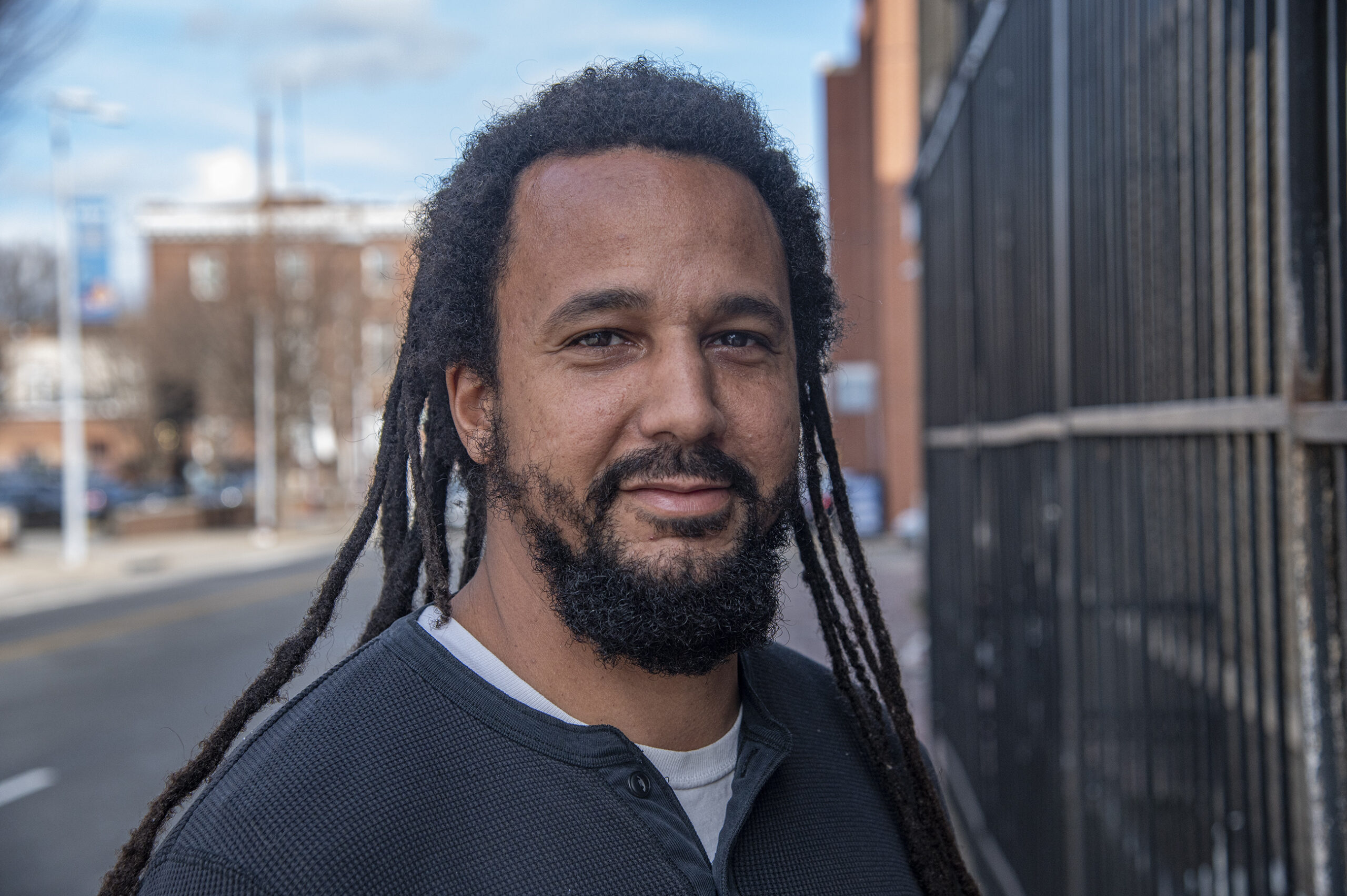
Josh Epperson has no problem with his book, “Living on the Edge of Time,” being classified as a self-help manual. “That’s a genre it could fit into,” says the writer and branding consultant. “It is self-help and, yes, pop philosophy. I don’t mind that description. I want it to be accessible.”
Epperson, 40, thinks he’s found the secret to a happier, more prosperous life. So far, it’s working for him and he thinks it may work for you, too. “To access compelling experiences in life, you have to wield your choices, direct your choices,” he says.
First, he adds, you have to learn to deal with the cacophony of the modern world. “Technology, especially with phones and social media, is a serious barrier to a healthy life. You have to navigate every corporate entity who has an interest in having you buy the endless plastic products and eat the shitty foods. Those are the influences constantly around us and they have more ways than ever to influence us. You need an approach, a tool, to get through it. You need to think about your choices.”
Choice is a key word for Epperson. Not only does his self-published book theorize that people can use a “good choice” strategy to better their lives, the charting of “bad choices” is the crux of his work as co-curator and text writer of the Valentine’s provocative new exhibit, “Sculpting History: Art, Power, and the ‘Lost Cause’ American Myth.”
Housed in sculptor Edward Valentine’s studio – a place which once showcased the 19th century artist’s series of busts of notable Southerners, including many Confederate generals– “Sculpting History” uses the man’s own workspace to carefully and surgically trace the racist iconography and pro-Dixie hagiography in the South following the Civil War. Valentine, whose most notable works included the sleeping Robert E. Lee statue at Washington & Lee University, was a key architect in what was known as “The Lost Cause.” Setting up the presentation here is akin to installing a detailed history of the Civil Rights struggle in Strom Thurmond’s man cave.
“This isn’t about sticking it to Edward Valentine,” Epperson maintains. “It’s about the truth. These people did what they did and you just need to tell what they did. There is evidence.” He smiles. “As the kids would say, ‘we have the receipts.’”

The story being told is all about choices, he says. “We wanted to show that this Lost Cause history wasn’t just some arbitrary happenstance, it was a series of intentional choices that people made across time again and again to solidify this narrative in our culture that white people are better than Blacks and Blacks deserve less than white people. They baked that into the culture, not because it was true, but because they made intentional choice after choice to do so.”
He adds that Valentine created other objects, too, as the exhibit shows. “He did Black caricatures, busts and sculptures for mantelpieces. He was making a profit off of making caricatures of Black children, which is just gross. They were designed to present Blacks as lazy and ugly and lower than whites … it was important in establishing the hierarchy.”
Edward Valentine’s brother, Mann, had originally founded the museum, Richmond’s first, in 1898. It acquired the artist’s studio and artifacts in 1936. “The impetus for doing this exhibit was the murder of George Floyd and the social justice protests around the country in the summer of 2020,” says Christina Vida, the curator of general collections and the project manager of Valentine’s studio.
“We looked at this [space] as an opportunity,” she says. “But it wasn’t really serving the needs of the Richmond community at a time when statues were being pulled down by activists. We really thought that Josh’s voice would help to take this really complex narrative that spans three centuries and generations of Americans and tell it in a really succinct and understandable way.”

Epperson has been something of a spark plug since he arrived in Richmond in 2003 to attend Virginia Commonwealth University. He has started a popular podcast, published zines, collaborated with community organizations (he developed the BLKRVA black history initiative with Venture Richmond) and was the co-founder of Feast RVA, which combined creative class incubating and funding with delicious cuisine.
Last year, Epperson was the subject of an article in The Atlantic, “The Moral Case For Working Less,” where he talked about how he had found greater happiness and financial success when he left the corporate world. “Can I work only on projects that I find meaningful or interesting?” he postulates. “Can I make enough money comfortably but not in excess, and work 20 hours or less a week? It’s been five years now and so far so good.”
Adventure, Wonder and a Sense of Awe
Joshua Ryan Epperson was raised in Northern Virginia to a white mother, who lived in Fairfax, and an African American father in Alexandria. “Both of my parents were alcoholic, and I grew up in Section 8 housing, so my neighborhood was very dangerous with lots of drugs and violence,” he recalls. “I didn’t like being there and my home life was unpredictable. I mean, alcoholics are unpredictable.” His mom eventually got sober and healed, he adds. “Both of my parents are in a good way now.”
He describes the teenage Josh as rebellious. “I was a class clown for sure. I started skateboarding and at that time, the ‘90s, that was very much a crime. The skating culture had a real bad kid energy to it.”
Being biracial, fitting in was difficult. “There were only two versions of race in the public consciousness then. You were Black and a thug or you were white and did good in school. I had a lot of white friends and I talked like I do now then, and yet I’m more Black than not. So at the same time I was being received as a Black kid, I was not quick with the slang, you know. ‘A white man in a Black body,’ I was hearing that at the time.”
He attended South Lakes High School in Reston, which he hated. A lot of the time he’d play hooky to skate. He was also becoming a big fan of psychedelics. “It’s horrible to think that I was 16 and I was dropping acid but I must say, you learn stuff. I saw the world in a completely different way.”
But there was one trip too many. At the jam-band-heavy All Good Festival in 2000, his junior year, someone dropped a large dose of acid on his tongue, leading to a “crazy bad trip” where he perceived that everyone around him was telling him that he’d never fit in.
“I survived it and came out of it impressed by how powerful my mind was. I realized that I had let the voices of other people rule my mind for so long, and not in a positive way,” he explains. “It’s the origin of a practice that is in the book – and meditation was key. I came out of that thinking that my brain is all powerful,” he laughs. “I looked into telekinesis.”
Schooled in the practice by a “hippy aunt,” mediation is something he still uses today. “You get a strong, clear mind through meditation but you have to practice and build the skill. I’ve used it to my advantage. And in the book, I try to introduce the concept.”
After high school, he attended the Leesburg campus of Northern Virginia Community College, then made his way to Richmond and VCU. “It was a big transition time for me. I hated psychology by the time I got out of there.”

For the next six years, he took jobs to pay the bills “so I could party a lot and go to punk shows.” He worked a variety of gigs for United Airlines at Richmond International Airport, including baggage handler. “It’s why I never check a bag,” he quips. Then he got a job at MCV as an administrative assistant for its OB-GYN residency program. It was a dull gig pushing paper that ended up inspiring him. “I had never seen people who loved their jobs before, doctors working long hours, dedication. I thought, ‘Oh, you can actually have a job you like.’ It triggered me: ‘What can I do that I’m passionate about?’ Eventually it became writing, history, the arts.”
For kicks, he helped start a zine, “Useless Motion,” and in 2008, began recording Booty Jams, a frank and irreverent podcast about sex and relationships. His first writing gig was turning the podcast episodes into articles for GayRVA for $25 an article.
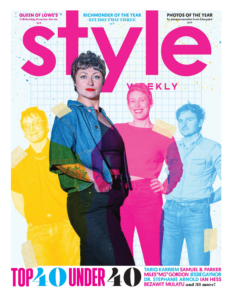
Then there was Feast RVA, which was started in 2011, a collaboration with his friend Johnny Hugel. The pair were named Style Weekly Top 40 Under 40 recipients in 2014 because of the recurring event’s success (it was discontinued in 2020 when COVID struck). “I never thought of it as anything more of a one-off project,” he says. The inspiration was a similar event, Brooklyn Feast, that he encountered in New York City. “I was 27 or so and just trying to find my way. I wanted to do something more than just go to work. But we did it and man it came together in a real grassroots way. The first year was at the Quirk Gallery and people were into it. And I kind of lost my job because of it,” he laughs. “I was working on Feast when I should have been working.”
Epperson eventually found his way to Prophet, an international branding agency with an office in Richmond. He learned the craft of brand storytelling there and says that’s where he started writing for real. “We were working for fortune 500 companies. And the money was good. For a kid who grew up in section 8 to be making $160,000 for writing words on a computer, not fucking bad.”

He eventually rose in Prophet’s ranks to do branding and communication strategy for major companies. One of the accounts he worked on was Met Life Insurance. “We were the ones who killed ‘Peanuts,’” he laughs. “While the visual team was redesigning how the company looked, we were working [on] their tone of how they sounded and the voice in how they communicate to customers.”
After seven years at Prophet, he was considered for the job of creative director and lost out. “I was kinda pissed. I was running a nonprofit, Feast RVA. People were telling me, ‘You are a leader in this community.’ I’m sitting on some boards, and I’m at my job and they are saying ‘You are not a leader.’ I didn’t feel valued.” Epperson not only quit the job, he completely re-thought the materialistic way he had been living.
“I had just bought a Land Rover, I was looking at expensive watches. Man, I was into it. And when I quit, I was going to find another job but I started working for myself. I took a three-month break. It was at that time that I really challenged some of these ideas and completely changed how I was living.”
Epperson now lives with the intentional collective, Earth Folk. He’s traded in his Land Rover for a Honda CRV and has brought the cost of his life way down. “I also brought the amount of work way down. And now I’ve oriented my life to those experiences I talk about in ‘The Edge of Time.’ I’m trying to surf, to be in nature, to love my girlfriend, to eat well and heal myself.” He wants to buy a camper trailer and explore the country, and to turn “The Edge of Time” into a series of seminars. “I want to share the message.”
In those three months after he left the corporate world, Epperson thought hard about what he wanted out of life. “There were three big ideas – adventure, wonder and sense of awe. So I went back into my work and said, ‘How can I build my life around those?’” He smiles. “I’ve started my experiment. Let me see if I can get away with this shit. The worst thing that’ll happen is that I’ll have to get a job.”
“The Edge of Time” by Josh Epperson is available locally at Shelf Life Books or at edgeoftimebook.com. For more on Josh Epperson, go to josheppersonwrites.com.